Highroad Suspension
Visit Live Site →The Challenge
Nick's Shopify store was in trouble on two fronts. First, the domain was blacklisted. Customers on private relay browsers, especially iPhone users, were getting red "Website Not Safe" warnings. Sales were dropping because people couldn't even reach the site.
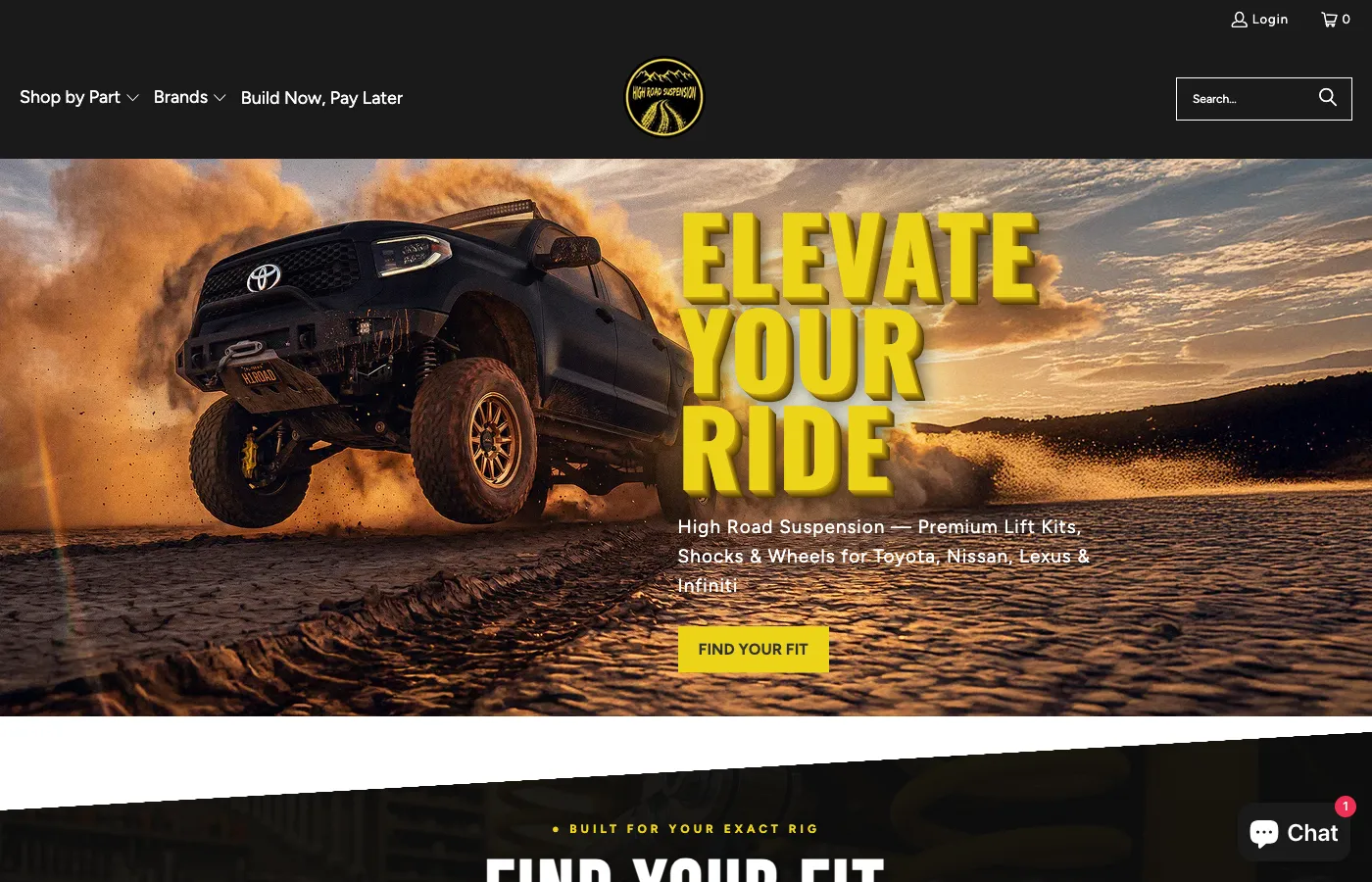
Second, the store itself was a mess. Products were organized entirely by tags with no real taxonomy. No structured collections. No logical navigation. The UI made it hard for customers to find what they needed, and the lack of proper product hierarchy meant Shopify's filtering and search couldn't do their job.
The Solution
The first priority was getting out of the red. The domain was moved to a clean server, the blacklist flags were cleared (Verizon was the primary culprit), and the browser warnings disappeared overnight. Sales started recovering immediately.
Then came the real build. Working on a Shopify developer account, the entire store architecture was rebuilt from the ground up. A metafield-driven product organization system replaced the old tag-based mess. Products are now organized into proper collections by part type (lift kits, leveling kits, coilovers, shock absorbers, struts, long travel, wheels) and by brand (30+ manufacturers including Bilstein, Fox, Icon Vehicle Dynamics, King, Old Man Emu, Total Chaos, and more). Navigation was restructured into a clean "Shop by Part" and "Brands" hierarchy that lets customers filter by exactly what they drive and exactly what they need.
Meta titles and descriptions were optimized across every collection and product page. Google Search Console data informed the copy strategy, targeting the terms customers actually search when shopping for off-road suspension parts for Toyota, Nissan, Lexus, and Infiniti trucks and SUVs.
The Result
The domain rescue was immediate. No more browser warnings, no more lost customers at the door.
The store overhaul is ongoing. The developer account build represents a complete UI/UX transformation: structured product taxonomy, metafield-driven collections, clean filtering, optimized navigation, and SEO-targeted content across every page. When it goes live on the production domain, Nick will have a store that matches the traffic and traction he's already built, with a systematic foundation that scales as the catalog grows.
This is the most technically complex project in the Coastform portfolio. It proves that the same attention to structure and SEO that goes into a hand-coded HTML site can be applied to a Shopify store when the platform demands it. That work is now its own service: Shopify store rescue and e-commerce SEO.
The connection was personal from the start. Nick found Coastform through April, Keith Roberti's bookkeeper, and what began as a domain emergency turned into a full partnership.
Services Provided
Includes validated Schema.org structured data, verified for Google rich results and AI search visibility.
More on the rescue itself: how I fixed a blacklisted Shopify domain.